Research Skills
- Research design and project management
- Archaeological survey and excavations
- Archival research
- Oral history interviews
- Ethnographic methods
- GIS mapping and spatial analysis
Research Interests
- Appalachia and the American South
- Historical and contemporary archaeology
- The politics of identity; race, class, gender, and sexuality
- Social inequality and socioeconomic inequity
- Incarceration and institutionalization
- Critical cultural heritage studies
- The intersections between tourism/ outdoor recreation with archaeology, history, and cultural heritage
The Western North Carolina Railroad Incarcerated Labor Archaeology Project
This project is supported by the Wenner-Gren Dissertation Fieldwork Grant: https://wennergren.org/grantee/cayla-briann-colclasure/
Archaeological Excavations
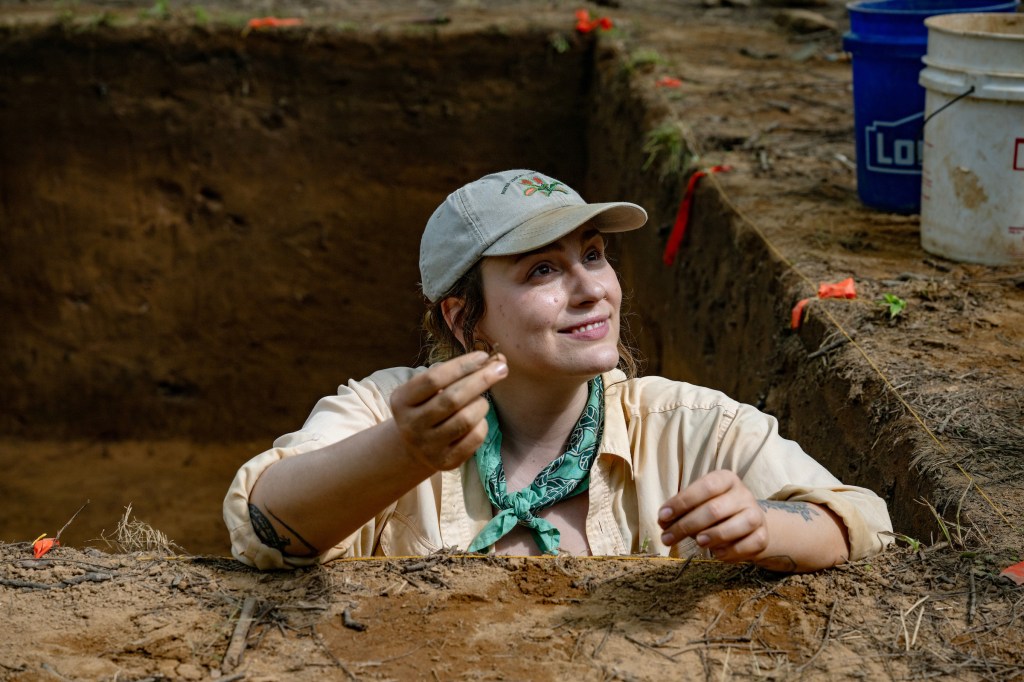
I have led four field seasons over the course of 2024-25 at the Cowee Tunnel Prison Labor Camp in Jackson County, NC. This is one of the many camps where incarcerated people were confined while being forced to build the Western NC Railroad. My excavations uncovered architectural remains, clothing artifacts, tools, weaponry, and more. Throughout this research process, I have consulted and collaborated with local researchers, residents, and organizations.

Ground-Penetrating Radar Survey
Ground-penetrating radar, or GPR, is a form of remote sensing which enables archaeologists to detect features beneath the ground surface.
With colleagues from the UNC Research Laboratories of Archaeology, I conducted a GPR survey at the Cowee Tunnel Prison Labor Camp prior to excavations. The GPR data showed a rectilinear feature consistent with the footprint of a building. This helped guide the placement of later excavation units.

Shovel Test-Pit Survey
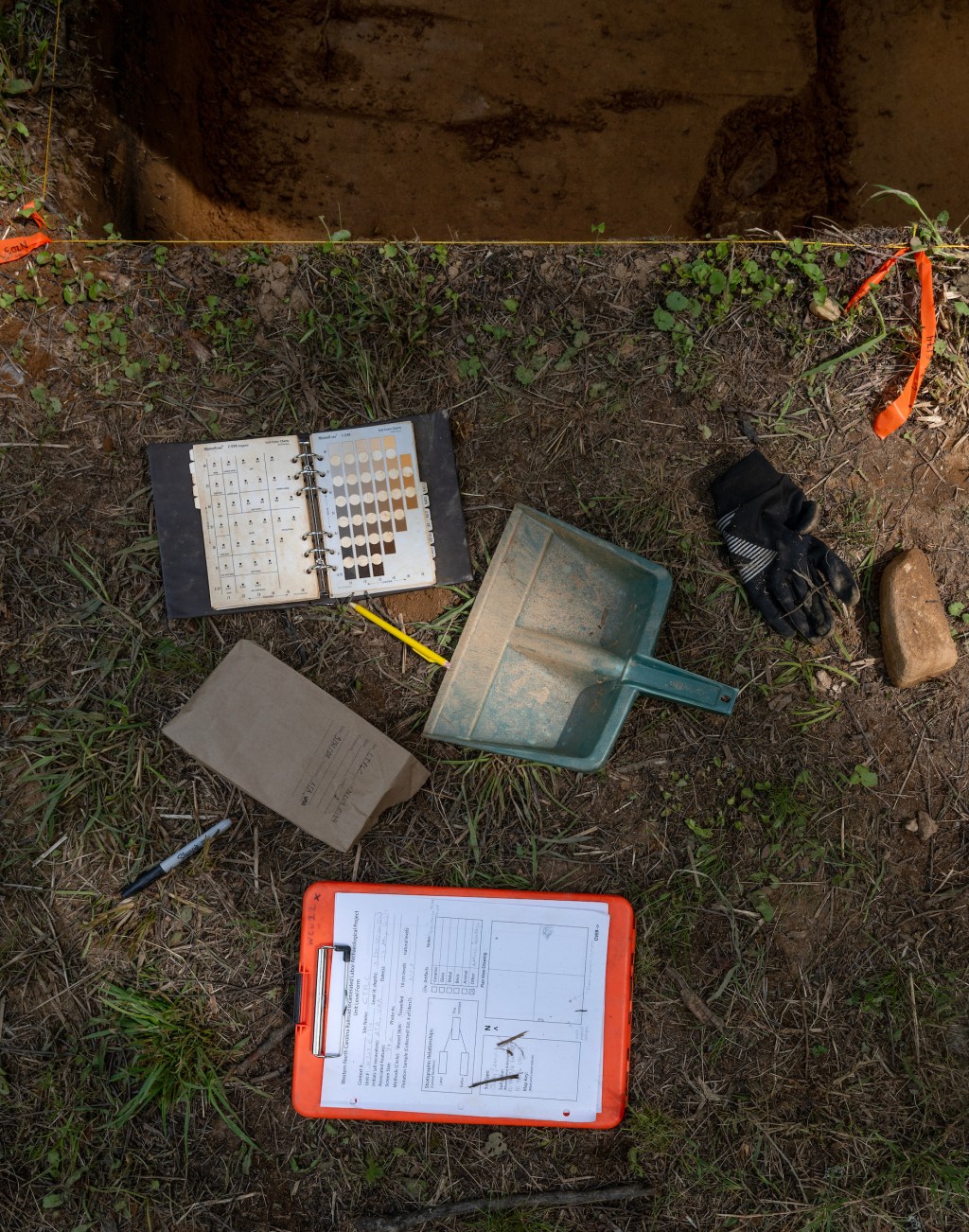
A shovel test-pit survey is a technique to determine the presence and density of archaeological artifacts across a site by digging small holes at regular intervals and recording your findings.
The shovel test-pit survey I led at the Cowee Tunnel Prison Labor Camp in 2024 was the first stage of my archaeological investigation. As the site was previously unexcavated, I needed to confirm its location as determined through historic maps and local knowledge. The STP survey confirmed the presence of the site when we found a high density of late 19th-century artifacts (primarily iron nails).
Spatial Analysis
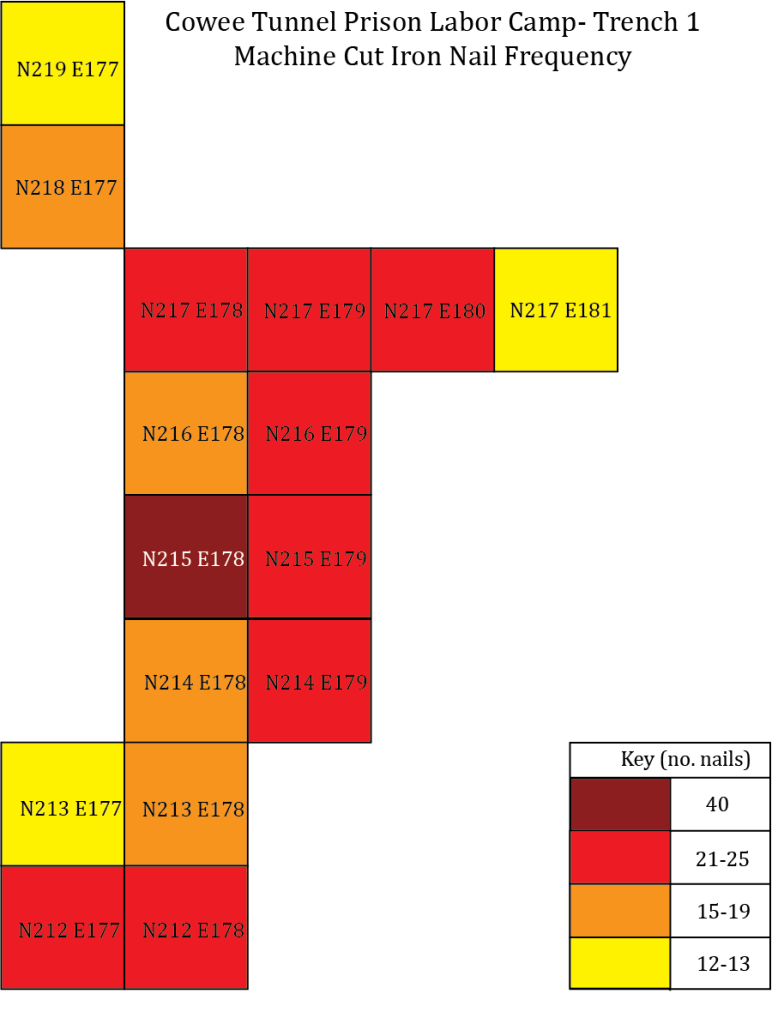
Mapping the artifacts recovered from the Cowee Tunnel Prison Labor Camp in QGIS has enabled me to interpret the where buildings were located and how the camp was organized. I am using viewshed analysis in GIS to consider the visibility of various site areas and how supervisors and guards used surrounding topography and built landscape were strategically used to surveil prisoners.
Artifact Analysis
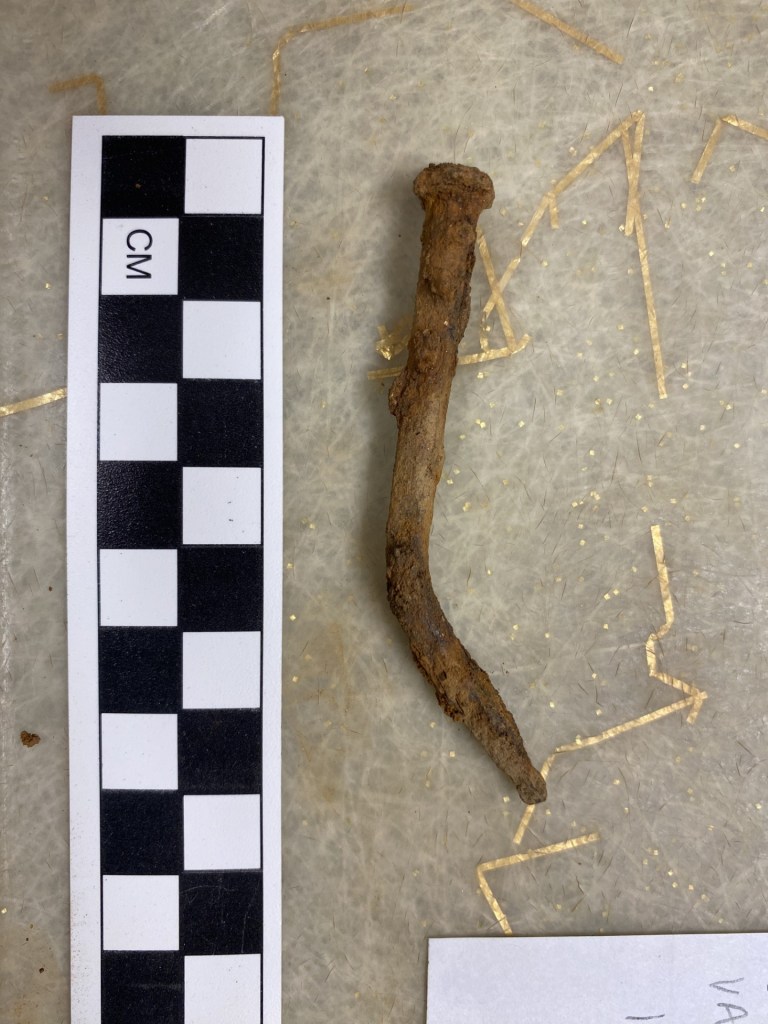
Each artifact recovered from the Cowee Tunnel Prison Labor Camp has been analyzed and catalogued by myself and my undergraduate volunteers in the UNC Research Laboratories of Archaeology. I am using morphological analysis on iron nails from the site to determine the nature of the buildings’ construction and what became of the buildings after the camp was abandoned.

Archival Research
I have done extensive archival research into incarcerated labor on the Western North Carolina Railroad. Much of this research has focused on State records at the State Archives of North Carolina and the UNC Wilson Library Special Collections. Prison Department records have been particularly helpful for learning more about the individuals who were incarcerated on the railroad.
Future Research Projects
I have several research projects lined up which expand on the Western North Carolina Railroad Incarcerated Labor Archaeology Project, and others which I hope to develop in the coming years.
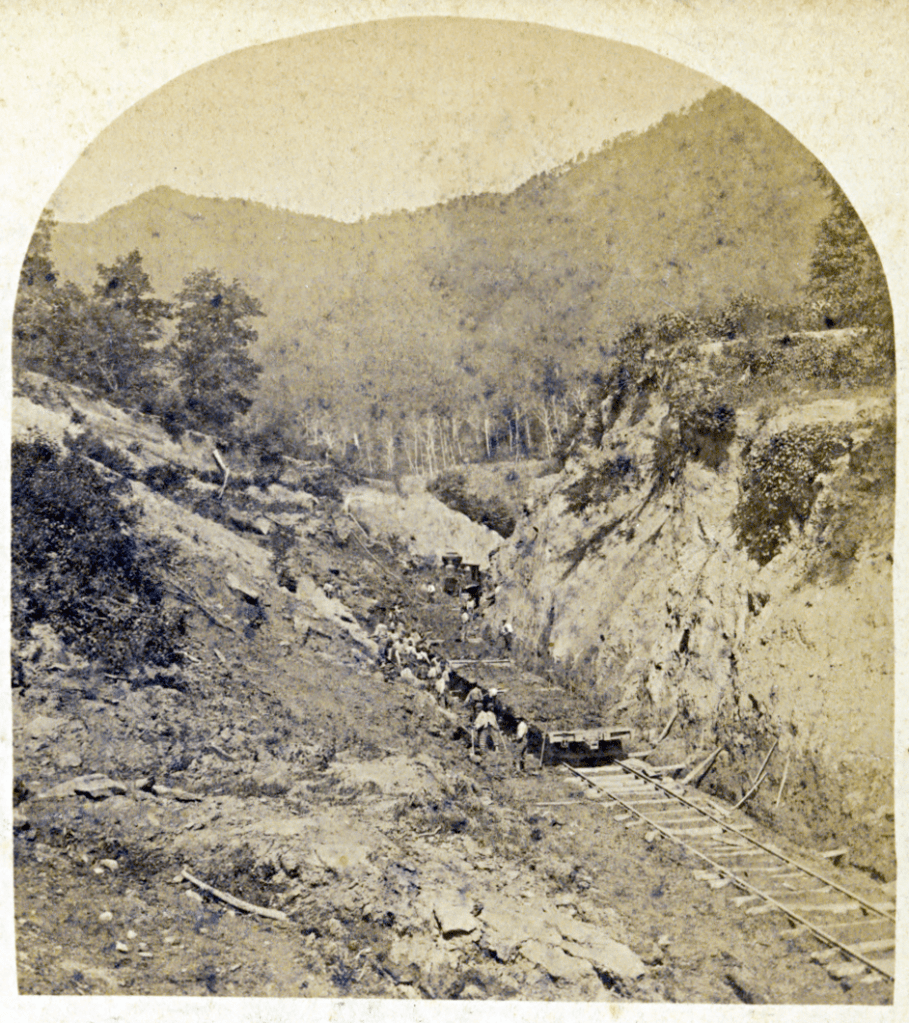
Deep Mapping the Southern Convict Leasing System
“Deep mapping” combines multiple approaches to understanding and representing space and place. These approaches can include cartography, art, music, oral history, narratives, and more.
Alongside collaborators in historical archaeology, public history, and geography, I will contribute to a deep mapping project which looks at incarcerated labor during the convict-leasing era across the American South. The project will build a digital, interactive map which tracks the movement of incarcerated people, the products of their labor, the profits they generated for companies, and current movements to study and memorialize their legacies.
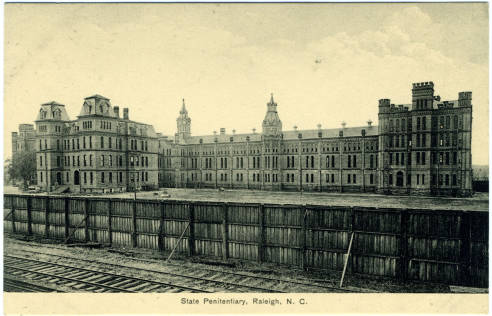
Examining Health and Debility in North Carolina’s State Penitentiary during the Convict-Leasing Era
My archival research into North Carolina’s historic prison records yielded a massive dataset of handwritten prison registers and ledgers which far exceed the capacity of an individual researcher to transcribe, tabulate, and code. In the coming year, I will utilize hand-written text recognition (HTR) software to manage this dataset and conduct several forms of analysis. For instance, using data on prisoner’s health from registers and physician’s reports, I will explore my theory that incarceration was being mobilized as a debilitating force by the State which had lifelong consequences for the mental and physical health of those who survived their sentences.
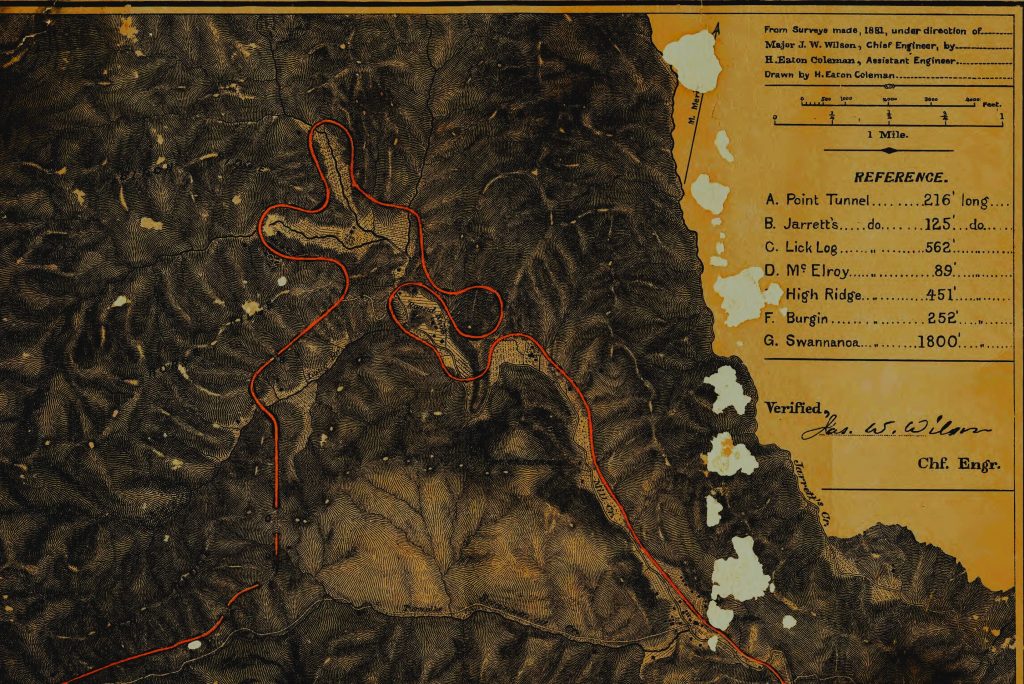
Archaeology on WNCRR Prison Labor Camps in McDowell County, NC
I would like to expand the WNCRR Incarcerated Labor Archaeology Project in partnership with the individuals, organizations, and institutions I have formed relationships with over the past several years. The devastation wrought by Hurricane Helene on local communities and infrastructure in McDowell County delayed my planned archaeological survey along the WNCRR near Old Fort. There are numerous other prison labor camps along the WNCRR in McDowell County which have the potential to further illuminate the history of convict leasing in North Carolina.
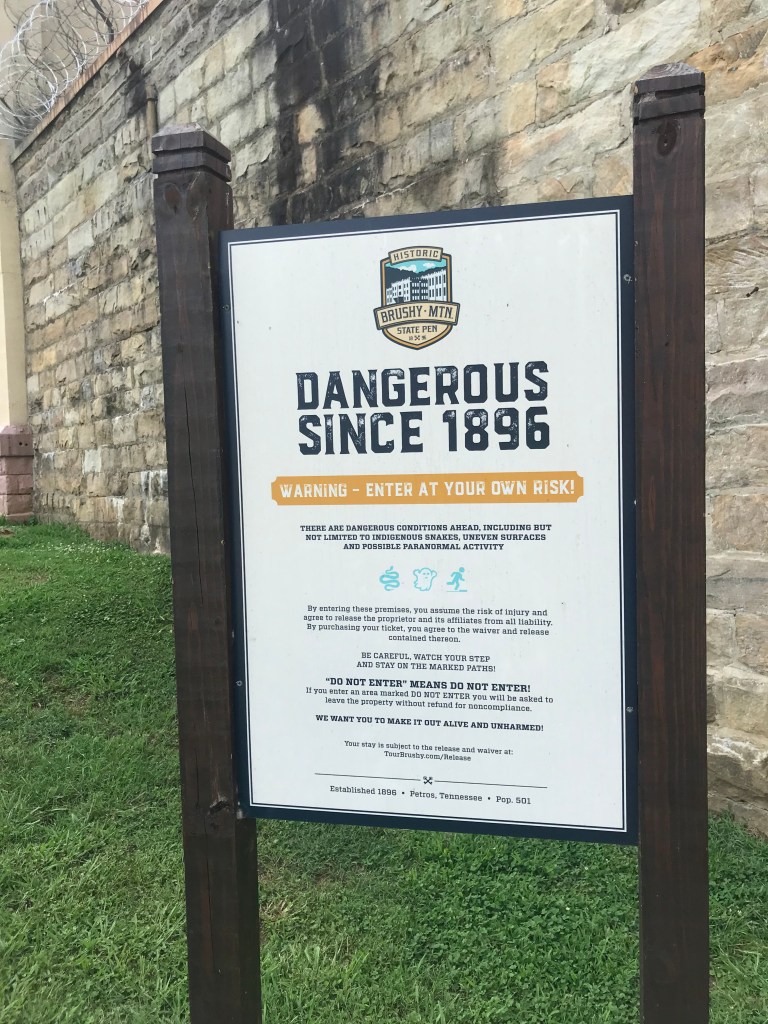
Tourism, Recreation, and Difficult History in the American South
Tourism and outdoor recreation are growing industries in the American South. These industries intersect with the region’s difficult histories at sites of enslavement, incarceration, and institutionalization. Sometimes, this produces dynamic processes of accountability, learning, and healing. More often, it creates fraught environments where responsibilities are contested and the truth is sanitized.
I am amassing information about sites that fall along the spectrum of these intersections; from places where descendants and other vested communities are actively involved in creating historical narratives and benefitting from tourism, to places where the past is purposefully obscured or misconstrued.
This line of research may branch in multiple directions, from projects focused on individual locations (see the following) to a more expansive, comparative look at these trends across the region.

Tennessee’s Brushy Mountain State Penitentiary: 113 Years of Carcerality and Crisis
The Tennessee legislature ordered Brushy Mountain State Penitentiary to be built atop a coal seam in Morgan County, where it opened its doors in 1896. The prison operated coal mines on the property manned by incarcerated workers into the 1960s. In the 1980s, during the rise of mass incarceration, Brushy was reclassified as a maximum security facility. It was decommissioned in 2009, after the much larger Morgan County Correctional Complex was completed. A venture capitalist group transformed Brushy Mountain into a tourist attraction, liquor distillery, and event space beginning in 2012.
Obtaining permission to excavate at Brushy is unlikely, so I envision a project which examines the prison’s extant architecture, first-hand accounts, oral histories, artifacts collected by employees, archival materials, and current tourism practices. I will develop a book proposal for this project which I will submit to academic presses in 2026-27.
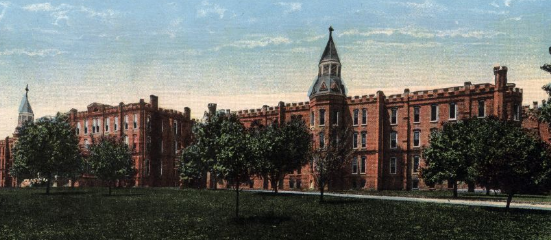
Race, Gender, and Sexuality at Lakeshore Mental Health Institute in Knoxville, Tennessee
The Lakeshore Mental Health Institute was first established as the East Tennessee Insane Asylum in 1883. After the institute closed its doors in 2012, the city of Knoxville transformed the campus into a park. Today, there is little interpretation of the history available to local residents who use the area for recreation.
Many people were institutionalized due to deviations from the norms of whiteness, heterosexuality, and the gender binary. My research would examine themes of race, gender, and sexuality at Lakeshore through archival research, oral history interviews, and archaeological methods. I would work collaboratively with community research partners who have direct experience with Lakeshore as former patients, employees, or park visitors to shape further research objectives and create public-facing educational resources about the site’s history.
 Cayla B. Colclasure