My pedagogy has been cultivated by robust communities of learning. As the graduate coordinator for the Race, Difference, and Power concentration at UNC, I led a series of anti-racist pedagogy reading groups and workshops for graduate students. I have co-authored a book chapter with Dr. Anna Agbe-Davies which builds on these sessions and discusses strategies for implementing trauma-informed and liberatory teaching practices.
Courses Taught
Courses for which I have been an instructor of record at the University of North Carolina, Chapel Hill

ANTH 101: Introduction to Anthropology
Spring 2024
Course description
Anthropologists use a wide array of methods to study humankind, past and present. The field of anthropology encompasses archaeology, sociocultural anthropology, linguistic anthropology, human biology, and more. We will draw from these different anthropological approaches to examine several topics including colonialism, identity, and social inequality.
By the end of this course, students will be familiar with many of the major concepts and methods used by anthropologists. This course is designed to help students understand how anthropology can help us learn about pressing social issues such as globalization and how anthropology can be applied in the real world.
ANTH 151: Anthropology of Food and Culture
Summer 2023, Summer 2024
Course description
By the end of this course, students will be able to 1) demonstrate how factors such as culture, history, and environment interact with foodways, 2) evaluate relevant anthropological literature on food and culture, 3) explain the key concepts, methodologies, theoretical approaches, and issues of concern within the anthropology of food, 4) examine issues surrounding global food systems, modern agriculture, culture and cuisine, labor movements in food industries, and the impacts of these issues on the individual, 5) design and implement an anthropological research project.
Students will engage with the global processes shaping the lives and foodways of people around the world. Students will learn about cross-cultural understandings of food, and explore the social, cultural, historical, and political-economic dimensions impacting global foodways.
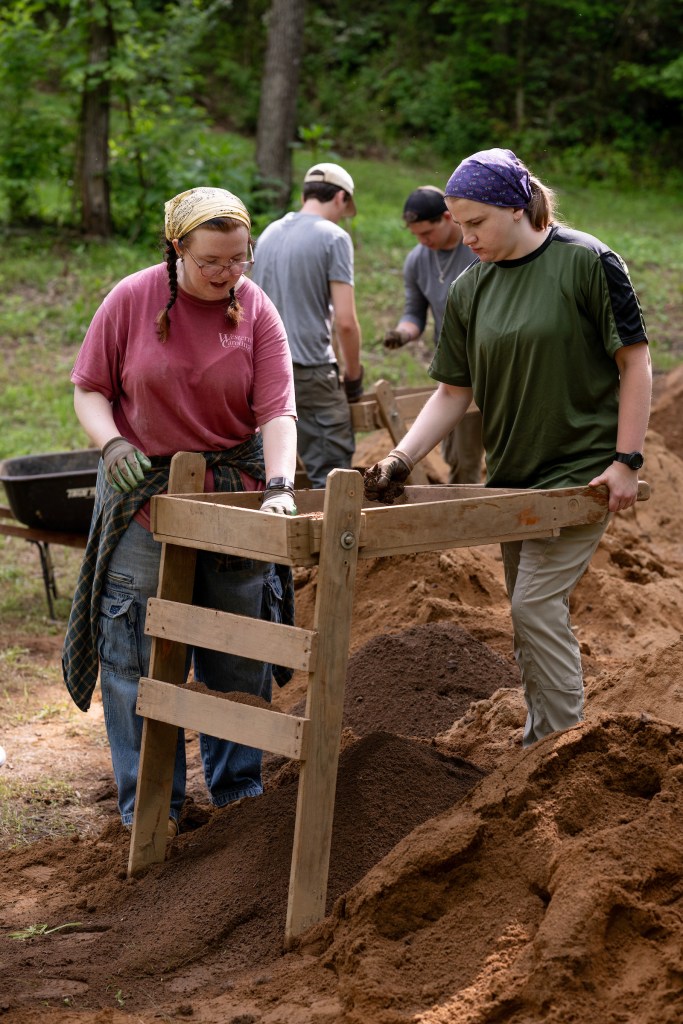
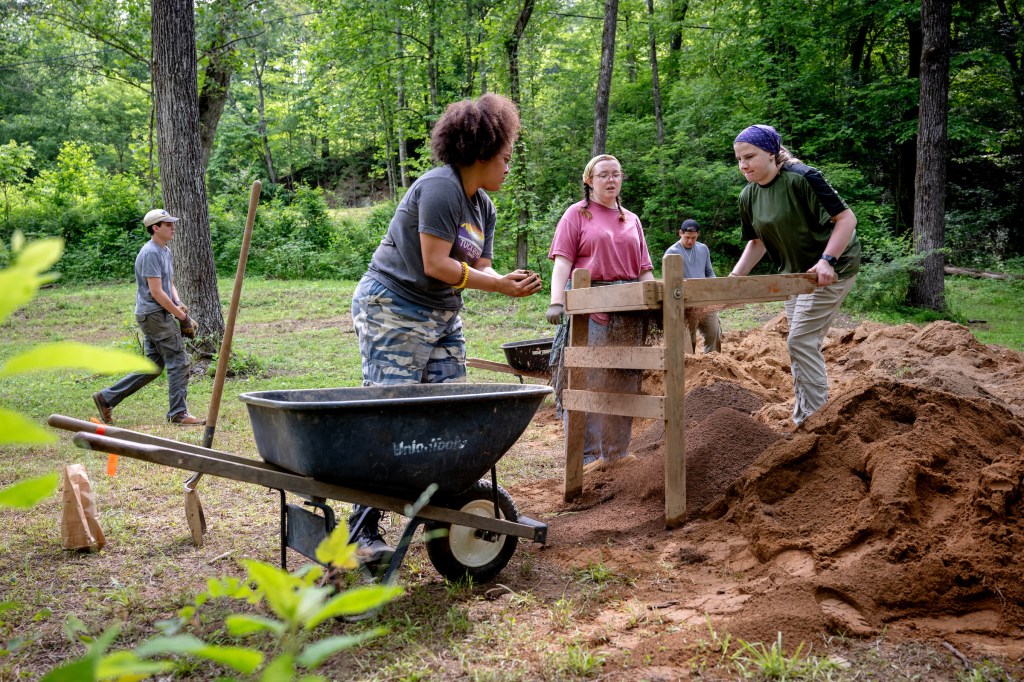
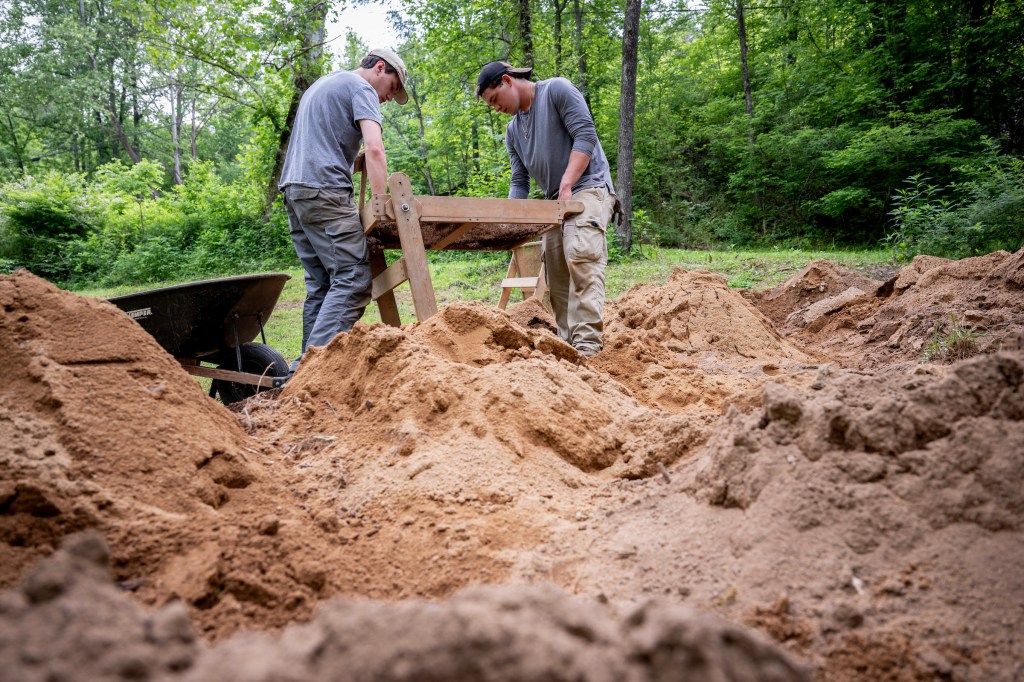
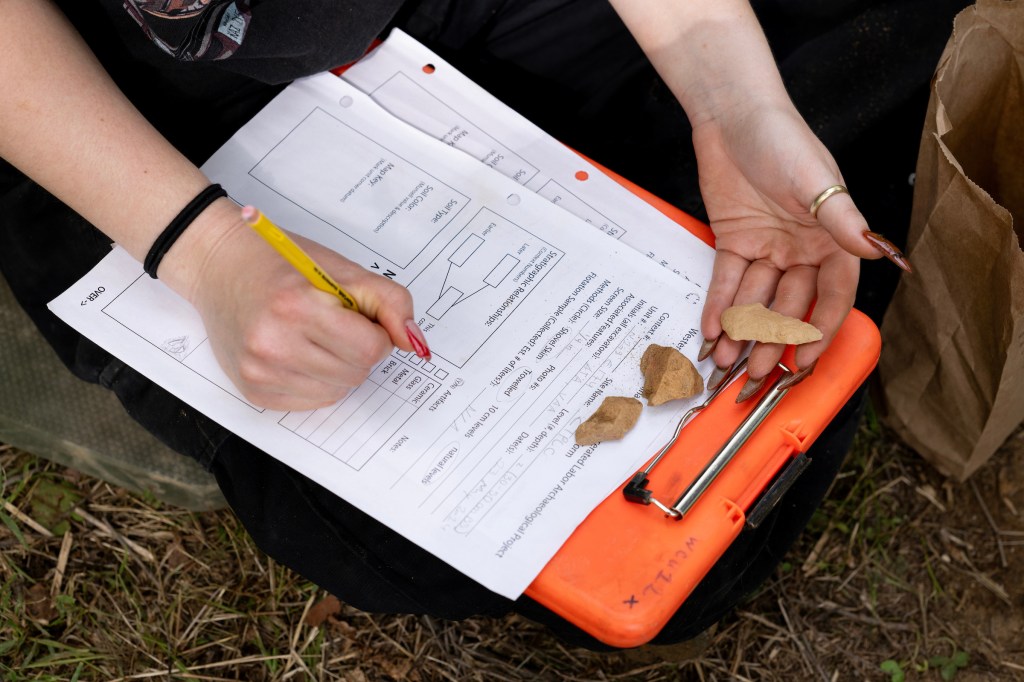
WCU Field School at the Cowee Tunnel Prison Labor Camp
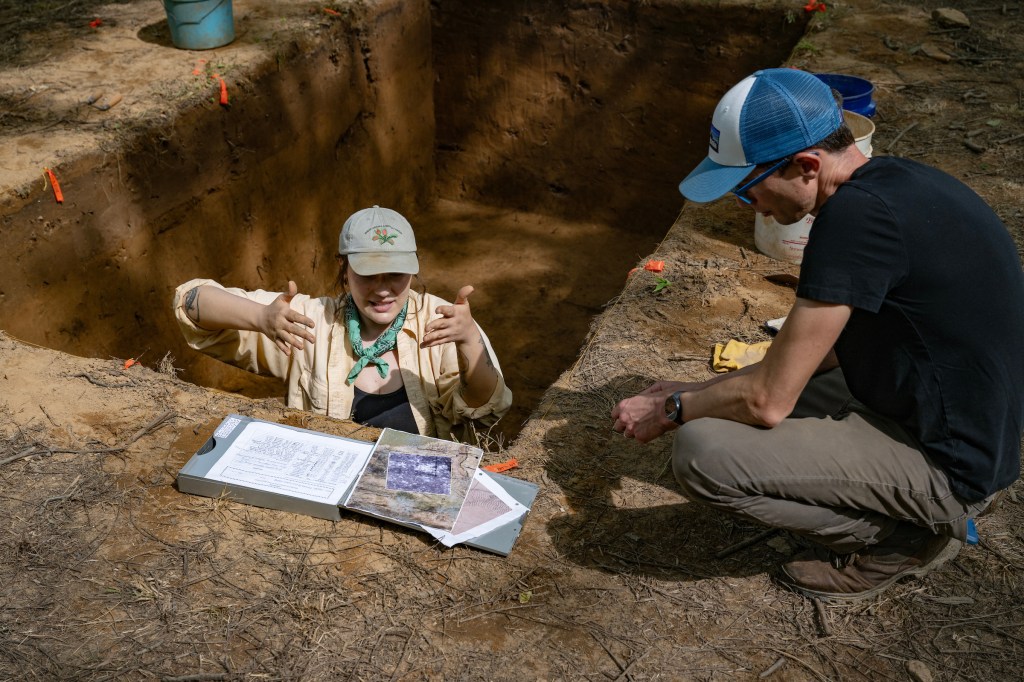
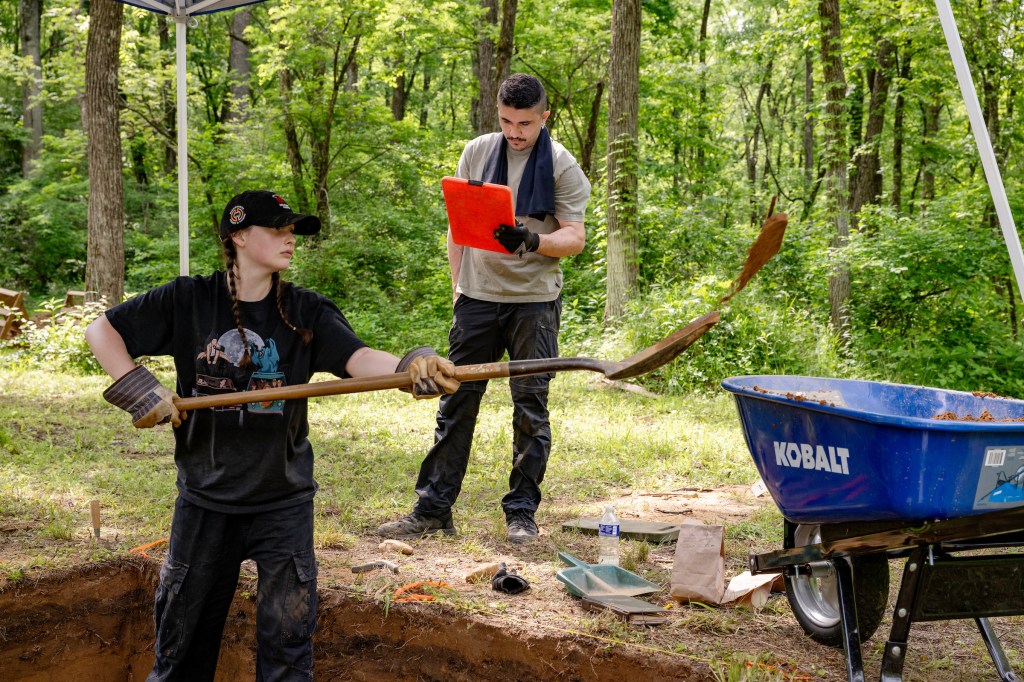
In May 2024, I co-instructed an archaeological field school with Dr. Benjamin Steere through Western Carolina University. We trained students in archaeological survey and excavation methods on-site at the Cowee Tunnel Prison Labor Camp in Jackson County, NC.

Future Courses
Courses I hope to teach in coming years
Introduction to Historical Archaeology
Ready to teach.
Course description
In North America, the period with which “historical archaeology” is concerned generally begins in the 16th century CE and continues up to 50 years ago (an arbitrary moving endpoint– some historical archaeologists also do “contemporary” archaeology which includes pasts as recent as yesterday). In this course, you will learn the methods used by historical archaeologists and you will practice some of these yourself by visiting an archive, conducting an oral history interview, and analyzing historical artifacts. By reading published findings from historical archaeologists, you will learn how past peoples’ everyday lives were impacted by (settler)colonialism, chattel slavery, industrialization, and other historical systems and processes.
The Archaeology of Capitalism
Ready to teach.
Course description
Capitalism is an economic system wherein private individuals or businesses own the “means of production” (i.e. the factories, raw materials, and other resources necessary to produce products or render services) and the majority of people sell their labor to these individuals and businesses for wages. There is also a capitalist ideology which accompanies this economic system, and both elements have shaped the world we live in over the past several centuries. This is an upper-level seminar where you will read widely about what historical archaeology can teach us about the impacts of capitalism on societies and people’s lived experiences. You will pair up with a classmate to formulate a final project centered around a specific relevant topic, and produce a podcast episode based on your research.
Archaeological Methods and Practice
Ready to teach.
In this course, you will learn the fundamentals of archaeological field and laboratory methods. We will begin by exploring archaeological research design and project management before turning to practical skills for the field. You will learn how to operate a total station, establish a grid for survey and excavation, and record findings. You will work with a collection of artifacts to understand how they should be processed, analyzed, and cataloged. Finally, you will learn about archaeological ethics through careful exploration of professional codes and guidelines, considering real-world applications, and participating in a mock “Ethics Bowl” inspired by the annual competition held by the Society for American Archaeology.
Labor in the American South
In development.
The American South is often constructed in the national consciousness as anti-labor due to the prevalence of anti-union policies throughout right-to-work states. However, the region has a rich history of labor organizing. In this course, we will examine southern labor movements, past and present. You will learn about 19th-century coal mining rebellions, early 20th-century textile mill strikes, and late 20th-century campus worker organizing. We will then turn our attention to ongoing movements, such as those around migrant workers rights in farming and food-processing industries and unionizing Amazon warehouses. We will consider how factors such as race, gender, and nationality play into the social dynamics of these movements. You will work on your final group project throughout the course, where your team will choose a specific event or movement and create a mini museum exhibit to display on our campus.
Student Course Evaluations
“Coming from no Anthropology background, I felt that I learned more about myself and other cultures. It was one of the reasons I decided to study abroad for the first time this summer.”
— Anonymous student, Introduction to Anthropology, Spring 2024
“This class was really interesting in how it tied together food with other broader topics such as culture, colonization, labor rights, carceral systems, etc. I learned a lot from this course and it taught me to be a lot more conscious about my decisions regarding food choices.”
— Anonymous student, Anthropology of Food and Culture, Summer 2024
“As a exchange student she has been the professor that has made me feel the best and safest here, in different ways. She has considered my language barrier and always tried to help if I had a question or something that was hard for me. Also I think she listens to all of her students and tries to adapt everything here so it suits us the best.”
— Anonymous student, Introduction to Anthropology, Spring 2024
“Cayla Colclasure utilized a hybrid style of teaching, where she provided students the opportunity to either sit in on her class in-person or join the class via Zoom. She made all the resources easily accessible and her classroom environment feel comfortable and easy to express myself in, no matter how different or similar I was to everyone else.”
— Anonymous student, Anthropology of Food and Culture, Summer 2023
“Cayla did a great job with engaging us in the course material by having guest speakers give presentations on their research as a method of reinforcing what we had been talking about in class. Furthermore, the papers and projects that we had helped us engage further with the subject matter by performing anthropological methods like ethnographies.”
— Anonymous student, Introduction to Anthropology, Spring 2024
 Cayla B. Colclasure